Acquisition Exposure: How Standard Warranty Provisions Leave UK Business Buyers Carrying Disproportionate Risk
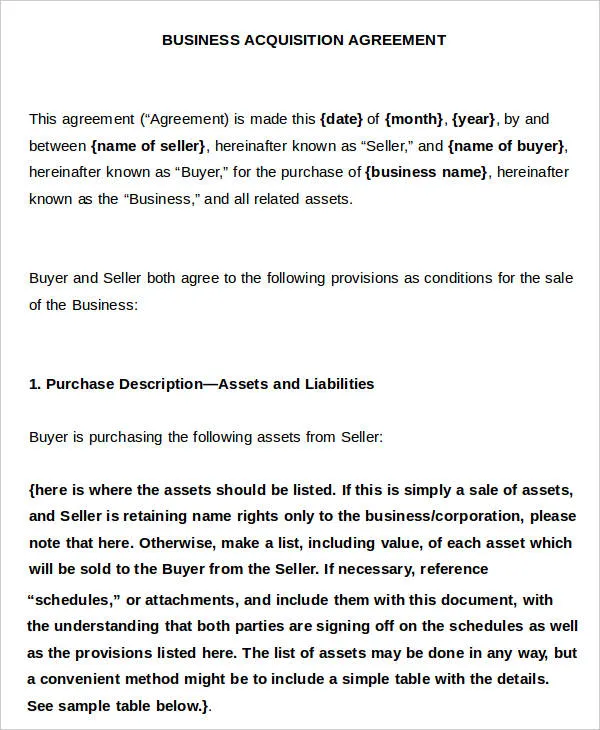
Photo: business acquisition contract signing legal documents UK, via images.template.net
The completion of a business acquisition is typically accompanied by a sense of resolution. Months of negotiation, due diligence, and legal process culminate in a signed agreement and an exchanged consideration. For many buyers, the warranty schedule—the long appendix of representations and assurances provided by the seller—represents the safety net that justifies their confidence in the transaction.
That confidence is frequently misplaced.
The warranty and indemnity framework in a typical UK asset or share acquisition is not a balanced risk-allocation mechanism. It is a document that has evolved over decades of practice to reflect seller-side preferences, normalised through repetition until buyers accept its terms as market standard without interrogating whether that standard actually serves their interests. At AC Norris Advisory, we have reviewed warranty schedules across a substantial range of transactions, and the pattern is consistent: the structural features that most significantly limit buyer recovery are rarely the subject of meaningful negotiation.
The Architecture of Inadequate Protection
To understand why standard warranty provisions so frequently fail buyers, it is necessary to examine the three structural elements that determine the practical value of any warranty claim: the cap on aggregate liability, the basket or de minimis threshold below which claims are excluded, and the time limit within which claims must be notified.
Each of these elements is, individually, a reasonable feature of a balanced commercial agreement. Sellers are entitled to some certainty about their maximum exposure following a transaction. Buyers should not be able to bring trivial claims that create disproportionate administrative burden. Limitation periods prevent the indefinite extension of post-completion uncertainty.
The problem is not the existence of these features—it is the specific parameters at which they are set, and the manner in which they interact to eliminate recovery in precisely the circumstances where a buyer most needs it.
Liability Caps: The Number That Sounds Reasonable Until It Isn't
The aggregate liability cap in a UK business acquisition—the maximum amount a seller can be required to pay across all warranty claims—is typically expressed as a percentage of the purchase price. In many mid-market transactions, this figure is set at somewhere between 20 and 50 per cent of consideration, with sellers routinely pushing for the lower end of this range.
The implicit logic is that a buyer who discovers post-completion problems of sufficient magnitude to exhaust a 25 per cent cap has suffered a loss that is, in absolute terms, very substantial. What this framing obscures is that the purchase price itself may have been calculated on the basis of representations that prove to be materially inaccurate. If a business was acquired for £4 million on the basis of financial statements that overstated profitability, and the true value of the business was £2 million, a cap of £1 million (25 per cent of consideration) leaves the buyer with a £1 million unrecovered loss even after a successful claim.
The cap, in other words, does not represent the buyer's protection—it represents the ceiling on the seller's exposure, which are not the same thing.
Baskets and De Minimis Thresholds: The Claims That Never Reach the Surface
The basket provision—sometimes called a threshold or aggregate de minimis—requires that warranty claims must either individually exceed a specified value, or must collectively exceed a specified aggregate before the buyer can recover anything. The stated rationale is to prevent the seller from being pursued for minor issues that a diligent buyer should have identified or accepted as part of normal commercial risk.
In practice, basket provisions are frequently set at levels that exclude a significant portion of the losses that buyers actually suffer. A basket set at 1 per cent of consideration in a £5 million transaction means that claims must aggregate to £50,000 before recovery begins. Individual issues—a tax liability that was not disclosed, a contract that was misrepresented, an employee claim that was not flagged—may each fall below this threshold and therefore be entirely unrecoverable, even where the seller's warranty was demonstrably incorrect.
The interaction between the basket and the cap creates a corridor of irrecoverable loss at both ends of the claim spectrum: small claims are excluded by the basket; large claims are truncated by the cap. It is only claims of a very specific magnitude that the warranty framework actually addresses in full.
Time Limits: When the Clock Runs Faster Than the Problem
Warranty claims in UK business acquisitions are subject to contractual limitation periods that typically range from 18 months to three years for general warranties, with tax warranties sometimes carrying a longer period aligned to HMRC's enquiry window.
The difficulty is that many of the most significant post-completion issues do not manifest within these timeframes. A regulatory compliance failure may not attract enforcement action for several years. A latent defect in the target company's intellectual property may only surface when it is challenged by a third party. Employee relations issues that were misrepresented in the warranties may not crystallise into tribunal claims until long after the limitation period has expired.
By the time the buyer understands the full extent of what was misrepresented, the contractual right to claim may have already lapsed. The seller has received their consideration, the limitation period has run, and the buyer is left managing a liability that the warranty schedule was supposed to address.
The W&I Insurance Question
Warranty and indemnity insurance has become an increasingly common feature of mid-market UK transactions, and it is frequently presented as the solution to the risk allocation problems described above. The product allows buyers to claim against an insurer rather than the seller for warranty breaches, and in principle it can address the gap between contractual recovery and actual loss.
However, W&I insurance is not a substitute for rigorous warranty negotiation. Policies contain their own exclusions, limitations, and conditions precedent that may prevent recovery in circumstances that buyers assume are covered. Known risks—issues identified during due diligence—are typically excluded. Fraud by the seller is usually covered only in specific circumstances. Premium costs and retention amounts reduce the net benefit of the cover.
Buyers who accept inadequate warranty provisions on the basis that W&I insurance will fill the gap should scrutinise the policy terms with the same rigour they should have applied to the underlying warranties. The insurance market does not eliminate risk; it redistributes it—and the terms of that redistribution matter enormously.
Challenging the Market Norm
The most significant shift in perspective that UK business buyers can adopt is to reject the premise that standard warranty provisions are market standard in any meaningful sense. They are common—but common is not the same as appropriate, and the frequency with which buyers accept inadequate risk allocation does not make that allocation commercially rational.
Negotiation of warranty provisions is not merely a legal exercise. It is a commercial decision about the allocation of risk between parties with different information about the target business. Sellers know what they know; buyers are making decisions on the basis of representations. The warranty framework should reflect that asymmetry more honestly than standard market practice typically allows.
At AC Norris Advisory, we assist buyers across a range of UK transactions in understanding the practical implications of warranty provisions before they are agreed—not after the problems emerge. The time to interrogate the adequacy of your protection is during negotiation, when leverage exists and alternatives are available. By completion, the opportunity has passed.